California Dungeness Crab
iconic. sustainable and uncertain
committed to reasonable managment that protects ocean resources and maximizes opportunity
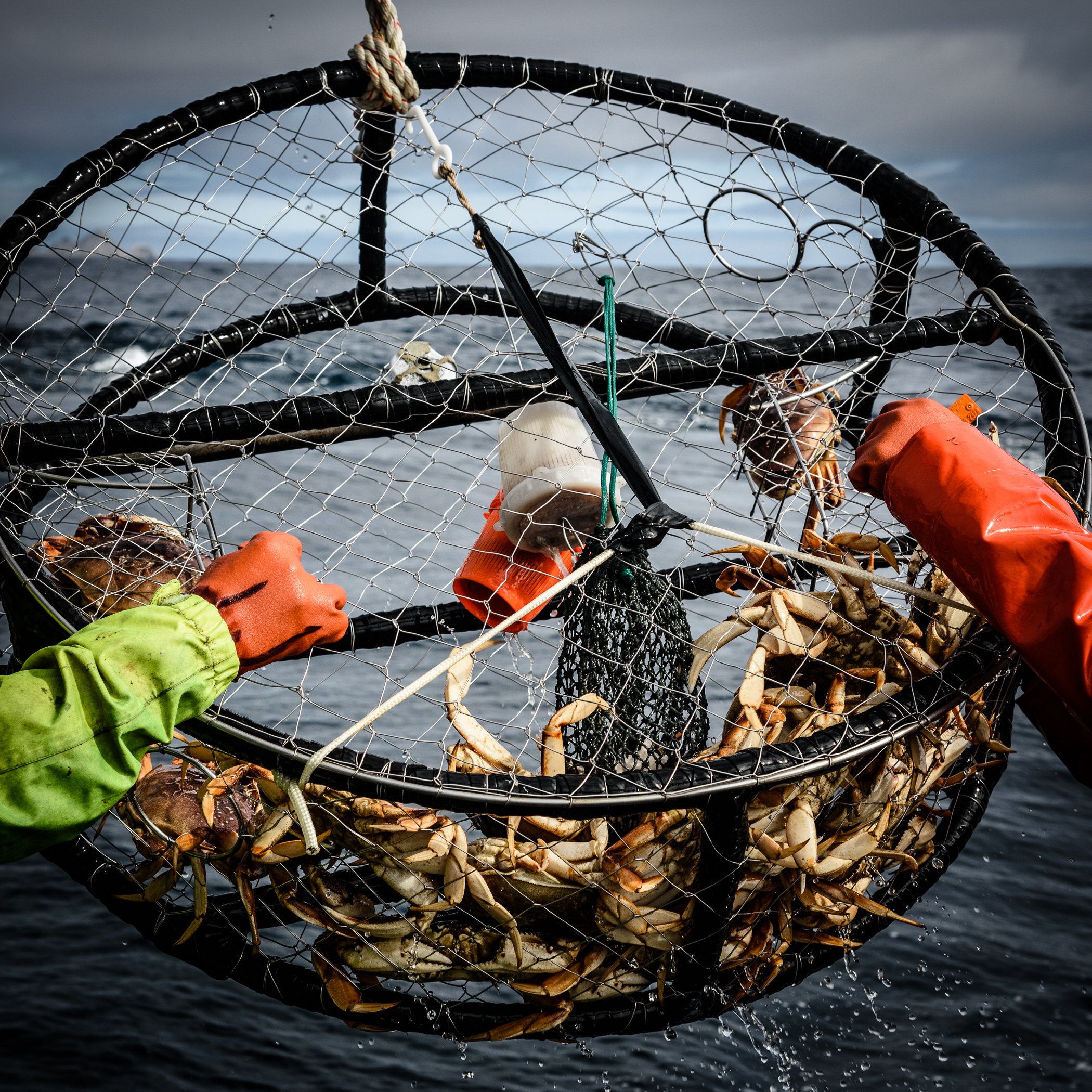
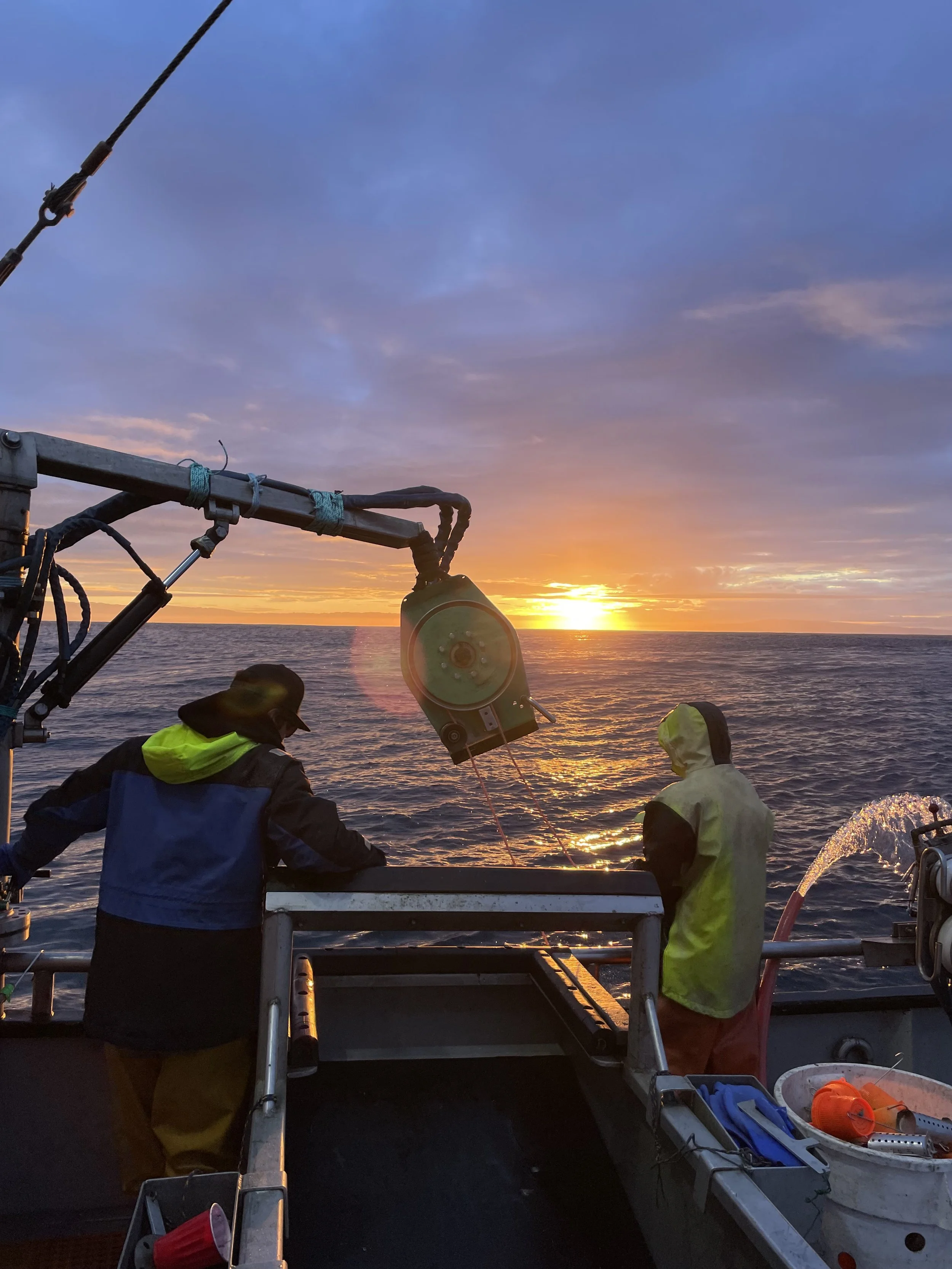
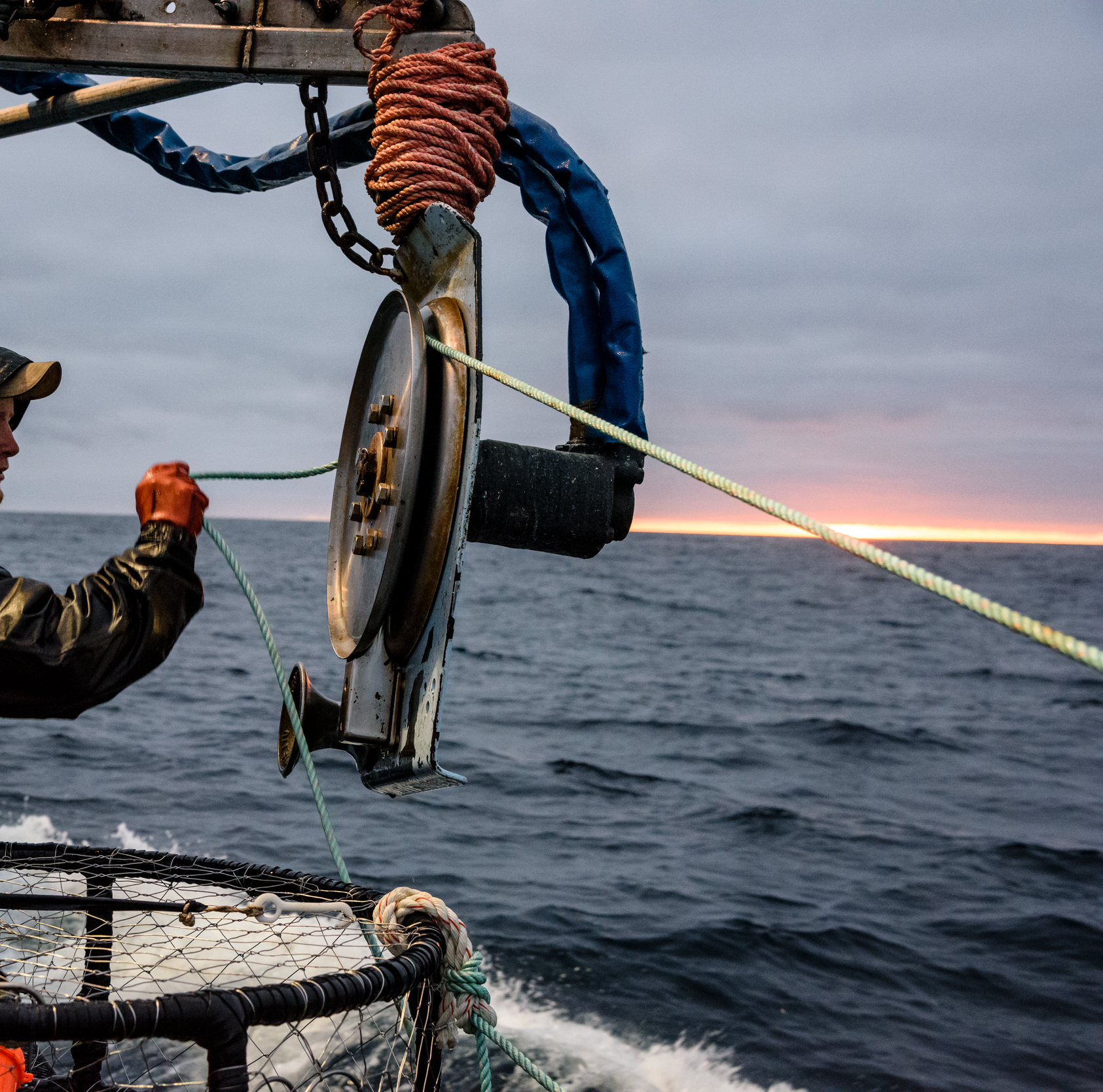
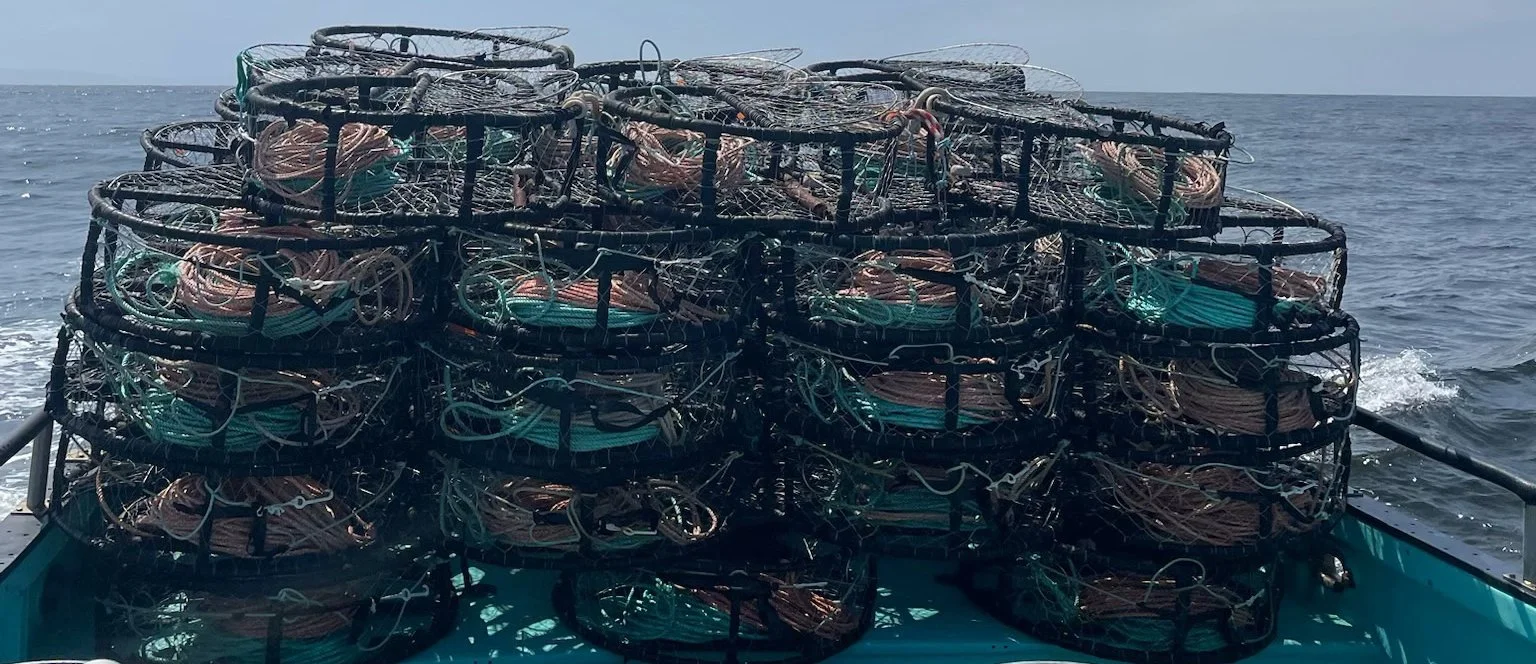
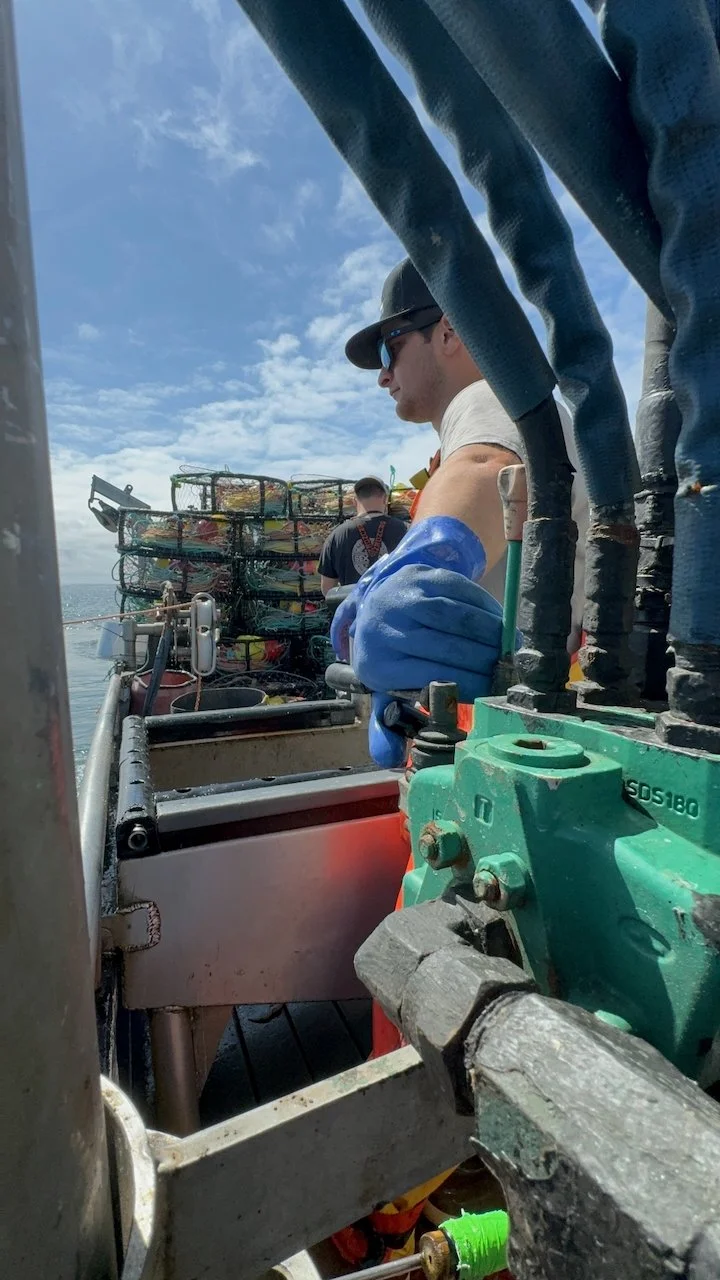
When the Dungeness crab season opens, the focus shifts to the water. Deck lights burn through the night, pots stack high on the docks, and crews push out into cold, unpredictable weather. It’s a derby fishery, meaning every boat can set gear at the same time and start hauling 64 hours later. The work is demanding, but this fishery drives local economies and remains a tradition that still defines California’s coast.
For more than a century, the Dungeness crab fishery has been managed through size, sex, and season limits that keep the crab population healthy and sustainable. Over time, additional regulations have focused less on the crab itself and more on how, when, and where people can fish, with the most recent being the Risk Assessment and Mitigation Program, or RAMP, introduced in 2020. RAMP uses scheduled risk assessments to decide if management actions are needed and whether the season can open or close.
These regulatory layers have made the season less predictable and the fishery harder to count on for fishermen, ports, buyers, and consumers. PCFFA is committed to data based management that protects ocean resources and maximizes harvest opportunity.
how we got here
Ten years ago, a marine heatwave drove domoic acid levels high enough to delay the entire commercial crab season for months. When fishing finally began in March, whales were already migrating north, and a spike in entanglements followed. That unprecedented timing created a one-season spike that has never been repeated, but it became the basis for everything that came next. Activist environmental groups sued the State of California over those entanglements, leading to a 2019 settlement that required the creation of the Risk Assessment and Mitigation Program (RAMP). That agreement, which PCFFA’s former leadership signed at the time, imposed temporary triggers and rules that still define how the fishery is managed today.
our work in the crab fishery
Addressing the challenges facing the Dungeness crab fishery will take advocacy, strategy, innovation, and long-term stewardship. PCFFA is leading that effort to protect opportunity for the fleet and a future for the fishery.
crab advocacy
PCFFA has been rebuilt to be accountable to the fleet and to carry that responsibility into the arenas where crab policy is shaped. We engage in the work that drives management and access across the fishery. Through steady advocacy, PCFFA keeps the fleet involved in the decisions that shape the fishery.
Our board members sit on the Dungeness Crab Task Force (DCTF) and its Executive Committee, and we hold both port seats and a dedicated PCFFA seat on the Dungeness Crab Gear Working Group. We actively participated in the RAMP 2.0 process and are committed to weighing in on every proposal that affects the fishery.
Our job is to make sure the voices of working fishermen are in the room and on record when policy is written.

commercial fishermen’s lost gear recovery network
Lost and abandoned gear recovery has always been part of the Dungeness crab fishery. PCFFA coordinates the Fishermen’s Gear Recovery Network, connecting local port programs, training fishermen, and managing tools and data to support this long-standing work. The program is fleet-run and focused on real-world cleanup and prevention in California’s working ports
About Alternative Gear
Alternative gear has received significant attention in the California Dungeness crab fishery, and there are certain times and conditions when this tool can be helpful. But it is also important to understand how it fits into the season as a whole.
The opening of the crab season and the spring fishery are incredibly different. When the season opens, the entire fleet is fishing at full speed in heavy weather, moving gear constantly and working around the clock. This is when seasons are made or lost. Every minute counts and the term “time is money” has never been more true. Boats are setting, hauling, delivering, and turning right back around to do it again. For the last 25 years, more than 90% of the crab caught each year has been harvested during the early part of the season. Alternative gear is not safe or practical at this time, but it doesn’t have to be because science has proven that whale presence is low when fishing starts.
By spring, conditions change, the whales start coming back, fewer boats are on the water, the crabs molt and feed differently, and the fishery slows down. With fewer crabs left on the grounds to catch, the price is higher than at the high-volume opening, and things shift from time being money, to money being time. More days on the water mean more opportunities for the fishermen who choose to keep fishing until the very end of the season. In this scenario, after April 1st, if the CDFW Director restricts traditional gear under RAMP due to increased entanglement risk, alternative gear can allow fishing to continue.
It is important to understand that while this is an exciting tool, it is just that, a voluntary tool for fishermen to access in certain situations, but it is not a replacement for the traditional fishery
practical solutions
longline grappling
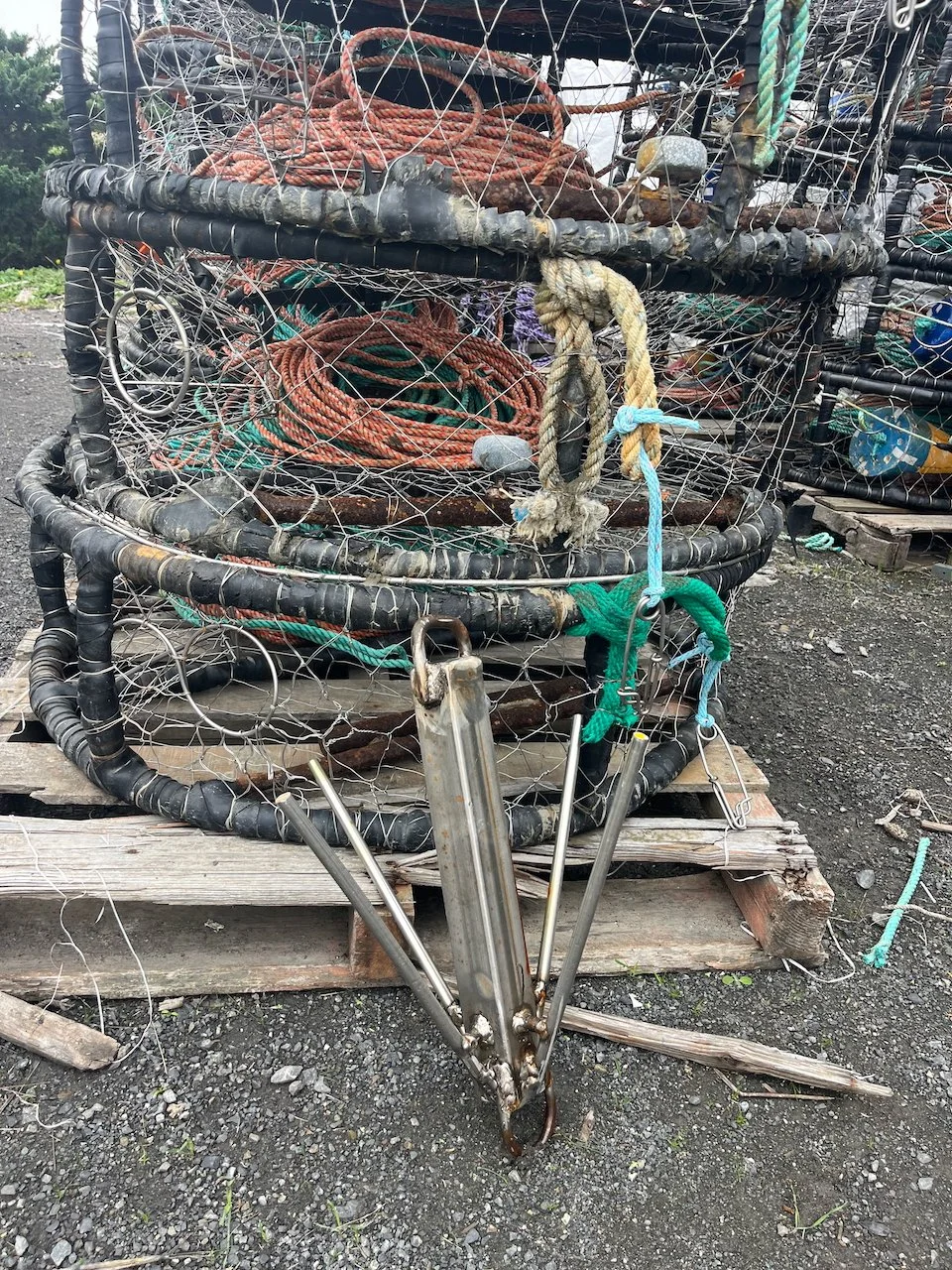
PCFFA has been working to ensure practical, affordable options exist for use after April 1 under RAMP. Through an Experimental Fishing Permit issued by the CFDW, PCFFA tested a configuration using traditional crab traps connected along a groundline and retrieved using a grapple. This approach operates without vertical buoy lines in the water column, uses the same trap configuration as pop-up or on-demand gear systems, and relies on grappling rather than electronic releases for retrieval. 2025 testing showed 100% success rate, and CDFW has requested a second year of testing with expanded participation to inform authorization in 2027. This additional testing will be conducted in Spring 2026.
This work is limited to the spring period and does not change PCFFA’s position that alternative gear is not viable at the scale, pace, or conditions of the traditional fishery.

line marking
PCFFA worked with CDFW to help distribute the first 650 coils of marked floating line, coordinating communication and logistics across ports. That firsthand experience guided PCFFA’s consultation with CDFW on the second, larger distribution completed in September 2025, making the rollout smoother and more consistent statewide. We’re also pressing for funding to support another round of line distribution before the 2028 compliance deadline, to reduce the fleet’s burden for entanglements in unidentified gear and keep every permit holder equipped to stay compliant.
data & risk tools
CDFW has expressed interest in modernizing data collection and reporting. PCFFA has convened and represented fishermen in meetings with the CDFW data team and technology developers to ensure that any future systems accurately reflect real fishing practices and workloads. We’ve also participated in several meetings and workshops with other stakeholders and insurance industry representatives to explore whether insurance tools could help stabilize businesses when seasons fail. The first workshop, hosted by the Ocean Science Trust, initiated the conversation; follow-up meetings are now focused on identifying practical options that can work within the realities of commercial fishing.
how the fishery is managed
Dungeness crab season management involves several moving parts. These are sometimes referred to as “the four horsemen of the crab apocalypse” to help stay sane while dealing with so many things beyond human control year after year. Each season depends on domoic acid testing, crab quality testing in the Northern Management Area, risk assessment data under RAMP, and the usual variables that make fishing unpredictable, including weather, fishing conditions, and market demand.
California’s commercial Dungeness crab fishery is regulated under state law and managed by the California Department of Fish and Wildlife, with the Dungeness Crab Task Force advising the Department, the Fish and Game Commission, and the Legislature. Within this framework, the Risk Assessment and Mitigation Program (RAMP) guides how whale entanglement risk is evaluated and how the fishery is adjusted when needed. Through scheduled risk assessments and informed by input from the Dungeness Crab Gear Working Group, the Director of CDFW has the authority to determine season opening and closing dates and to apply management actions to mitigate risk. It’s a complicated system, but even with all four horsemen in play, PCFFA works to be a reliable source for accurate, current information and an advocate for better seasons ahead.

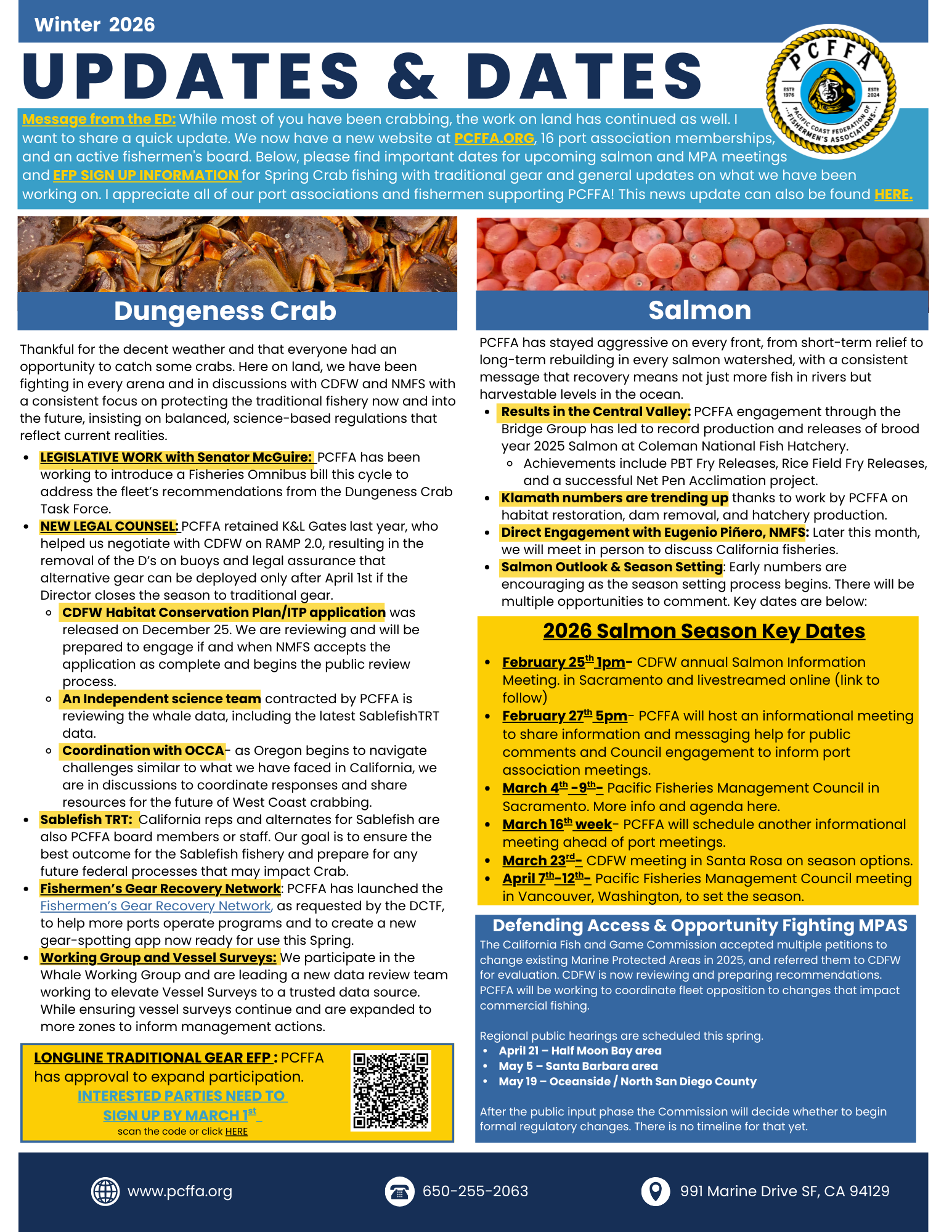
latest crab news